Writing · · 8 min read
We Were Never Meant to Grieve Alone
Rituals of sorrow, rivers of joy and the alchemical work of grief
It is the day after my last grieving fire ritual. My body aches with exhaustion. And yet, I radiate.
I feel like a young puppy, alive with fresh joy, brimming with pure playfulness. Both states coexist. Exhaustion and radiance. Aliveness and grief. Not as opposites, but as trusted companions.
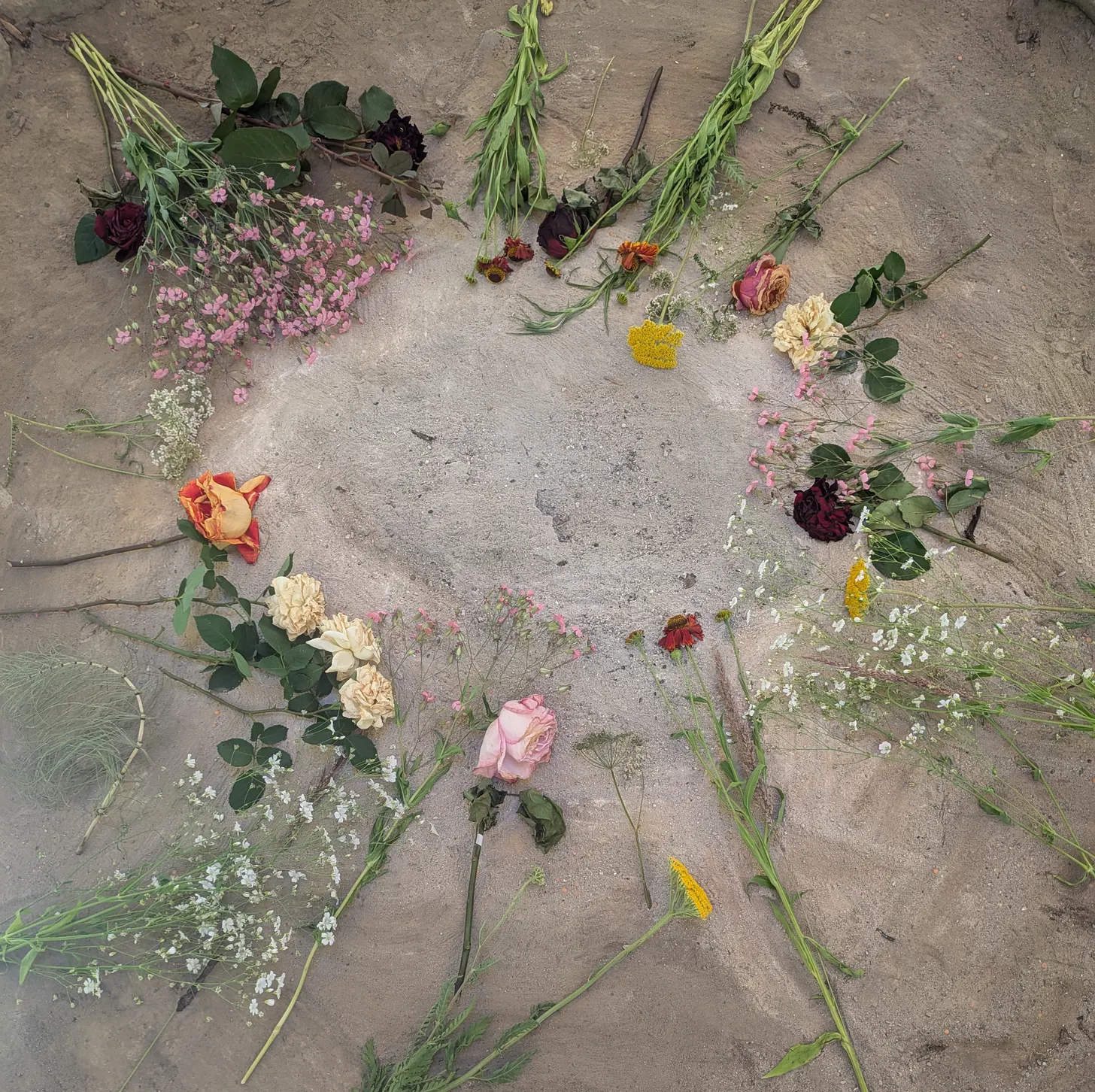
The more I sit with grief, the more I experience it as a catalyst for joy and radical vitality. Grief connects us with life force, with creative desire, with aliveness itself.
Grief is alchemical. It can transform disappointment, pain and numbness into acceptance. Or into something even larger still - a greater capacity for love. Sometimes grief transforms. Other times it remains, and it is we who shift, soften and expand in our capacity to be with sorrow.
Grief is also an excellent teacher. It arises when something is changing, guides us to update our inner maps. In that way, it prepares us to inhabit new realities. Mental well-being, at its essence, is the ability to relate to reality as it is.
This is not always easy. To accept what is, rather than what we wish to be, needs courage. Our ability to grieve, then, is a measure of health.
Grief is more than an emotion; it is a portal. A doorway leading us into a fuller relationship with the present.
Grief as Portal
To cultivate aliveness, we need to be grounded in what is here and now, even when it looks very different from what we wanted. It may taste like numbness, rage, confusion, regret, or sorrow. Both grieving and aliveness are about allowing, about letting what is, be.
And yet, many of us have been taught to meet grief with resistance, avoidance and suppression. When we block pain, we block joy. What we often fear will destroy us - letting grief in, letting it wash through - is in fact what creates space. And in that space, aliveness can flow. This broadens the ways we can engage with life - so beauty, sensuality, play and joy can return where before only grief resided.
Grief Begins with Love
We often imagine grief starts with loss, but really, it begins with love. It begins with the awareness that nothing is permanent, that this too will, in some way, end. Everything we love we will lose.
This makes grieving not just a response to death, but a practice for living. Grief is not something we get over. We build our lives around it. We practice being with it. We deepen our relationship to it.
"People don't know how to be when grief enters a house. She came with me everywhere, like a daughter."
- Lidia Yuknavitch, The Chronology of Water
We Were Never Meant to Grieve Alone
As a culture, we often relegate grief to the private realm, treating it as something to be managed alone. Many of us learned to grieve in isolation and to carry shame about our tears.
Shame is closely related to grief. Shame whispers that there is something wrong with our sorrow, something to hide. And yet tears evolved for togetherness - they are social messengers, meant to bond us with one another.
Still, public tears often evoke discomfort. People turn away, freeze, or rush to comfort too quickly, interrupting their flow.
But when grief is witnessed - in community, in ritual, in a clear container of safety - something shifts. The shame lifts. Grief becomes a doorway into belonging. Shared mourning reminds us we were never meant to carry sorrow alone.
Grief is the forgotten door
- excerpt of a poem I wrote for one of the grieving fire rituals.
to unspeakable beauty
waiting to be kissed into
Life.
Creating Cultures of Care
You probably know the song to sing on someone's birthday. But do you have words, songs or rituals to call on when grief arrives?
Grieving is a practice. And practices create culture. Culture is the sum of the ways we choose to be: the songs we sing, the rituals we tend, the stories we tell of who we are and were.
When I was first introduced to grief work and grieving fire rituals by my dear friend Janna more than five years ago, I thought of grief only in psychological terms - empathy, vulnerability, care. That is one layer, but grief is more.
When people hear I support grieving fires, they often assume a recent personal loss. But we grieve more than lives lost - we grieve relationships, ancestral stories that our bodies might still carry, lost visions, dreams, ecological destruction, parts of ourselves. What we are allowed to grieve, we are allowed to love. Having a regular space to grieve with explicit permission to mourn can also mean expanding our understanding of what grief can include.
The Dagara people of Burkina Faso carry a story that inspires me deeply. In their tradition, as shared by Sobonfu and Malidoma Somé, when someone dies, the entire village gathers to grieve - not only for comfort, but because tears are needed. They say it takes a river of tears to carry the dead to the land of the ancestors. Without sufficient tears, the soul cannot cross.
I love how this image honors grief as communal responsibility - an offering of love that sustains both, the living and the dead.
But myths are local, rooted in specific ecologies. Simply transplanting rituals from elsewhere will not fill the void for those of us raised in the West. We will need to create our own ways of grieving - experimenting, listening and developing practices grown from our own soil. This will demand imperfect experiments, small beginnings and collective remembering.
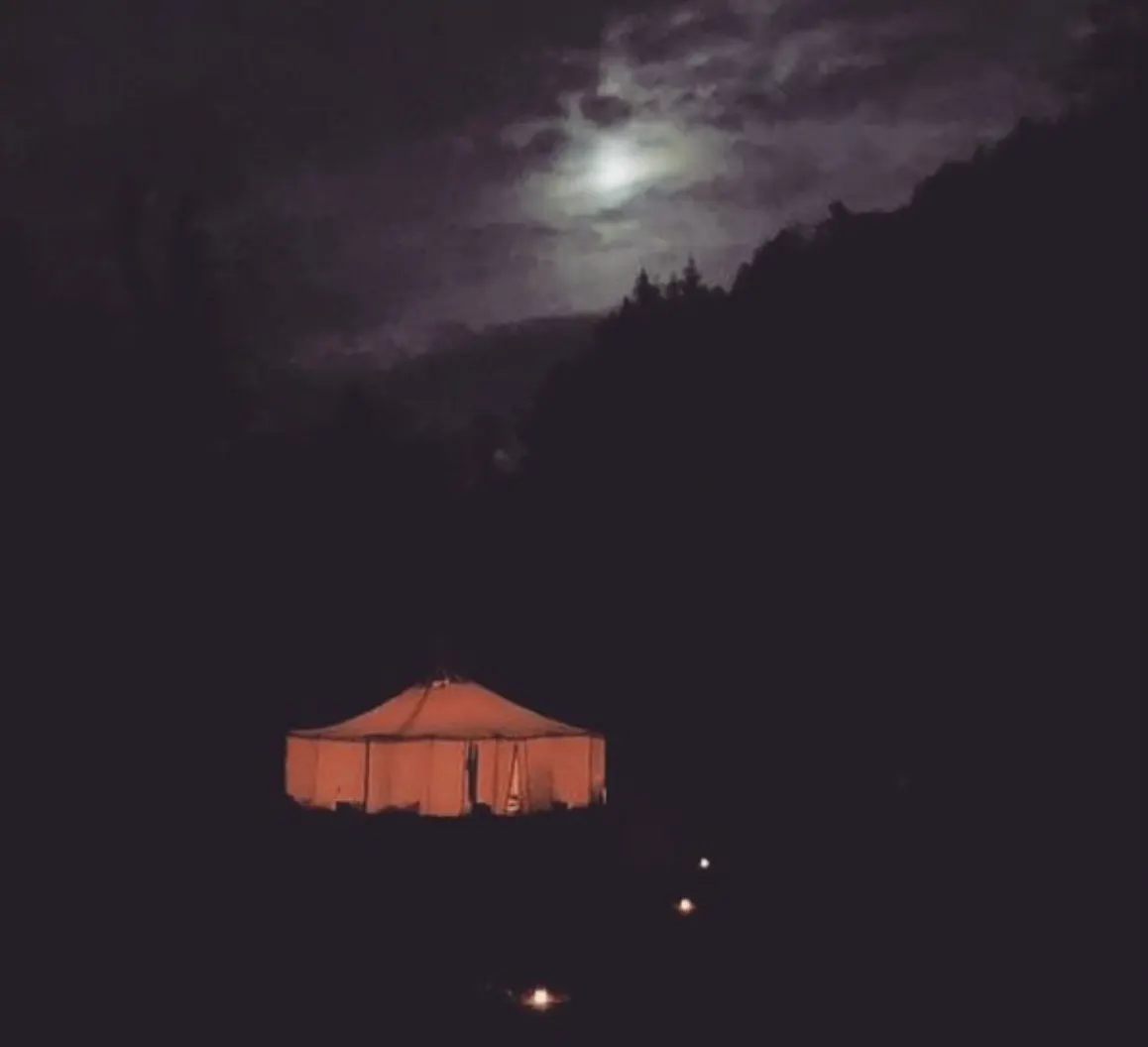
To carry the overwhelming size and speed of the tragedies that are unfolding, we need community. And perhaps, we also need to widen our sense of what community looks like beyond humans. Fire, water, earth, wind. Trees and rocks and rivers. These have always sustained life. Fire in particular has long been central to communal gatherings and in grieving fire rituals, it is also central to our support system. There is a powerful sense of belonging that can start to emerge when we learn to see the natural world and the elements as allies, available to sustain us through grief and life.
And it might be slower than what we would like it to be. Elements can't be rushed. Forests grow at their own pace. Truly grieving - letting pain and tears move through us - often takes longer and looks different than we would want it to. There is also beauty to be found in this pace. Months before the grieving fire, we begin to gather resin from trees - the tears of the forest - and dry local herbs as offerings for the flames. A more intimate relationship with the local ecosystem emerges. One cultivated through attentiveness and presence. An important part of the ritual is in the reciprocity. We give and receive support in all directions.
Tenderness Takes Hard Work
Grief work is cultural work. It is also emotional labor that demands deep courage. And it is physical labor, too.
Having spent more than a decade in personal development and spiritual spaces - cacao ceremonies, ecstatic dance, singing circles - I see the ways in which grief work is different. It is not a retreat. It requires effort.
Supporting a grieving fire means chopping wood, tending flames at 3 a.m., sweeping floors. There is nothing glamorous about it. And yet, this simplicity is part of its potency. Grief work invites us to be with it whether we want to or not. Like doing dishes or sweeping floors, mundane actions can root grief work in daily life. The reality is that we are often accompanied by grief whether we want it or not. What matters is finding ways to show up in its presence, to know we are not alone in the work.
This is my hope:
That grieving is no longer hidden or shamed.
That we learn to be together in both sorrow and radiance.
That we unlearn 'heroic' individualism, and remember collective belonging.
May cultures of love and grief take root.
Laura
Receive new writing
Free essays in your inbox, with the option to support the work as a paid subscriber.